

The melanoma means "tumor-black" and is the type of skin cancer most dangerous known. This is because it grows quickly and has the ability to spread to any organ.
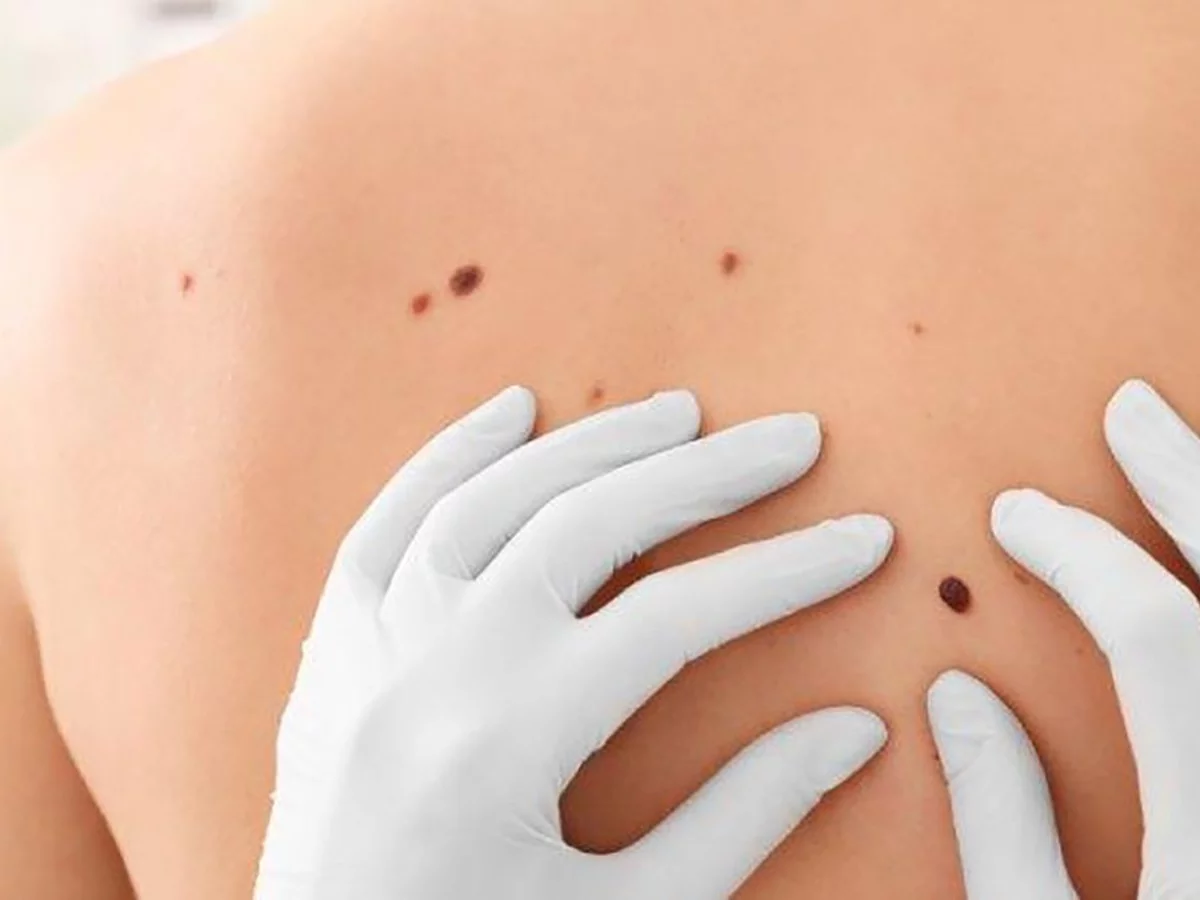
The melanoma comes from skin cells called “melanocytes”. These cells produce melanin (the dark pigment that gives color to the skin). The majority of melanomas are black or brown, but some are pink, red, purple or skin-colored.
Important:
Around 30% of melanomas begin in moles existing, but the rest starts in normal skin. This makes it very important to pay attention to the changes in the skin because the majority of melanomas do not begin as moles.
Color data:
The first operation of melanoma was made in the year 1787 by the surgeon John Hunter, although by then he did not know what it was exactly and is considered as an “outgrowth fungal cancerous”. It was not until 1804 when the French physician René Laennec gave the first definition of melanoma.
Major types of melanoma of the skin
1.- Superficial spreading Melanoma
– What you should know: This is the most common type of melanoma.
– How to grow: can arise in an existing mole, or appear as a new injury. When it begins in a mole that is already in the skin, tends to grow on the surface of the skin for some time before penetrating more deeply.
– Where to grow: it is most likely to appear on the trunk in men, the legs in women, and the upper part of the back on both.
– How it looks: it may appear as a patch asymmetrical flat or slightly raised and discolored with irregular edges. Colors include shades of tan, brown, black, red/pink, blue, or white. You can also devoid of pigment and appear as a pinky injury or skin tone.
2.- Lentigo maligna
– What you need to know: it develops in older people. When the cancer becomes invasive or spreads beyond the original site, known as melanoma lentigo maligna.
– How to grow: it is similar to the type of propagation surface, growing near the surface of the skin at the beginning.
– Where to grow: the tumor usually arises in sun-damaged skin on the face, ears, arms, or upper part of the torso.
– How it looks: it can be seen as a patch of flat or slightly raised with spots and uneven edges. The color is usually blue-black, but may range from tan to brown or dark brown.
3.- Melanoma acral lentiginous
– What you should know: this is the most common type of melanoma that is found in people of color, including people of african descent.
– Where to grow: often appears in places that are difficult to detect, as under the nails and on the soles of the feet or the palms of the hands.
– How it looks: it may appear as a black area, or brown.
4.- Melanoma nodular
– What you should know: this is the type of melanoma is more aggressive. Represents 10% to 15% of all cases.
– How to grow: the tumor grows more deeply into the skin more quickly than other types.Usually, it is invasive in the time it is diagnosed for the first time.
– Where to grow: it is found most often on the torso, legs, and arms, as well as on the scalp in older men.
– How it looks: this type is often recognized as a bulge in the skin, usually bluish-black, but can often also appear as a lump of pink or red.

How can I prevent melanoma?
You can reduce the risk of melanoma if you protect from excessive sun exposure and sunburn. It is also advisable to:
– Avoid the sun. Seek the shade, especially between 10 am and 16 pm.
– Do not use tanning beds. Use a bronzer spray in its place.
– Whenever possible, use hats with wings, sunglasses, long-sleeved shirts and pants.
– Use broad-spectrum sunscreen with a protection factor of the skin (SPF) of 30 or higher and reapply often.
– Use lip balm with sunscreen.
– High consumption of vegetables: Eat carrots, cruciferous and leafy vegetables is linked to the prevention of cutaneous melanoma (invasive).

Color data:
The 23 of may is celebrated the World Day of the Melanoma, with the aim to raise awareness about early detection. Watch the polka dots help in its prevention, also in healing, as a melanoma is detected early is healthy in almost 100% of cases.
The key is in the prevention and the self-assessment
Monitors and take care of your skin and your polka dots to see if there are changes and visit your doctor regularly to carry out examinations of the skin, especially if you have clear skin, will give you the best chances of detecting melanoma early, when it is most treatable.
Nathaly Bosch
Social communicator and Collaborator for Group Morivivi.


